How much does a concrete patio cost in Tulsa?
Patio price here turns on square footage, finish, and how much base work the red clay and shale demand once we dig in, plus the steel rebar grid that goes into every slab. Figured as an honest opening range, broom-finish patios mostly land around $8 to $14 a square foot, with stamped or decorative work closer to $14 to $22, before any deep base prep. We put a number on it after we have stood on the site and seen the soil, not over the phone where we would only be guessing.
How thick should a concrete patio be?
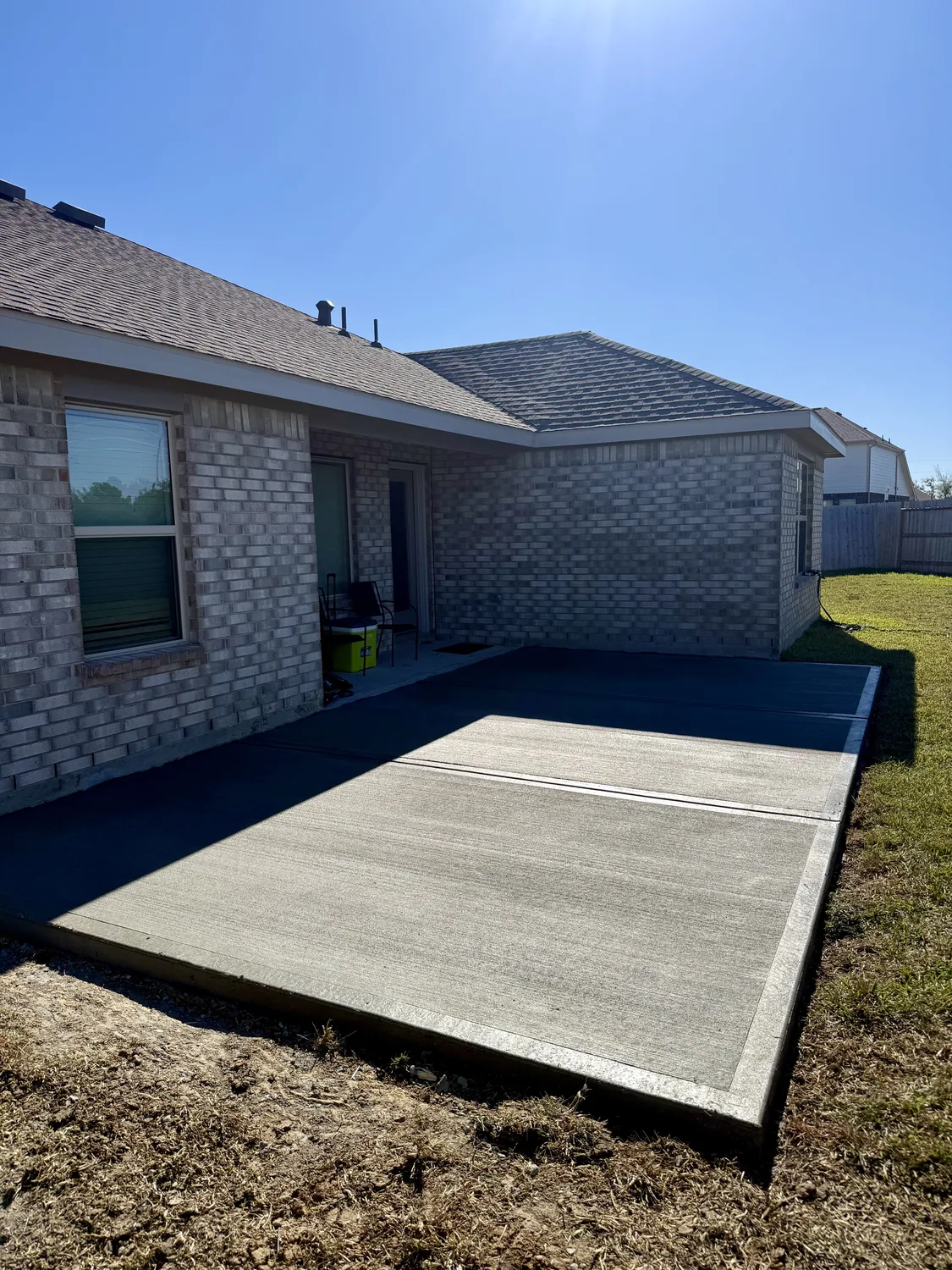
A residential patio rides on a 4-inch slab, which carries furniture and foot traffic comfortably, and we thicken it wherever a hot tub or other real weight is headed.
Will Green Country clay crack my patio?
Red clay over shale is the leading reason flatwork lifts and splits around Tulsa. It drinks in water and swells, then pulls back hard through a dry stretch, so we get ahead of it with a tied rebar grid in the slab and a compacted base under it, then tool control joints to steer any movement. Nobody can hold concrete perfectly still on ground that works like this; what we do is decide where it gives.
Can you pour a patio through a Tulsa winter?
Concrete has to cure above freezing, so deep-winter pours are limited and need cold-weather protection. We use an air-entrained mix all year because the freeze-thaw cycles here are hard on a slab, and we will tell you straight whether to pour now or wait for a better window rather than putting one down in conditions that weaken it.
Stamped or broom finish, which suits a Tulsa backyard?
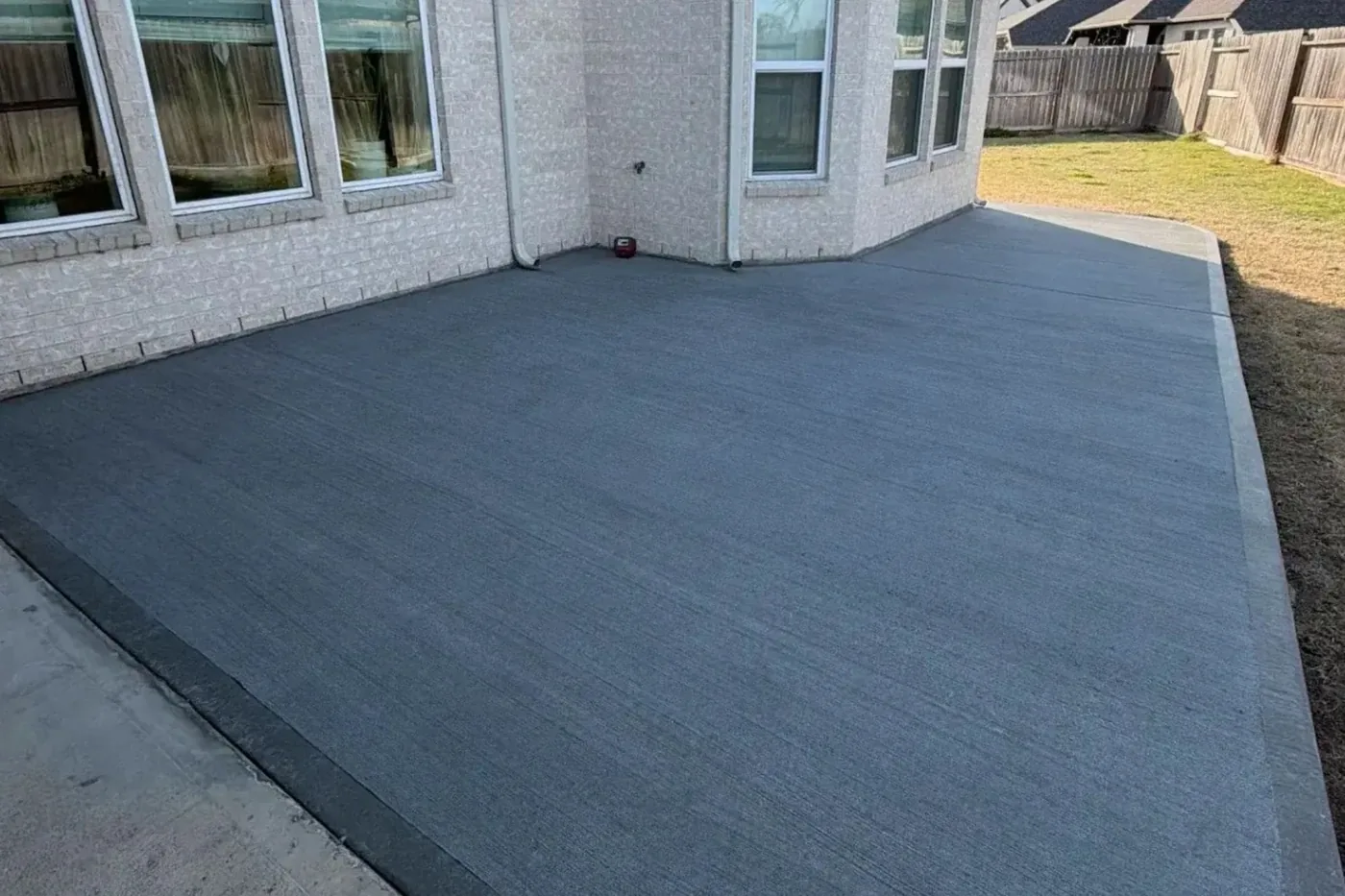
Broom is the everyday workhorse: textured, sure underfoot when a storm leaves it wet, and easier on the budget. Stamped delivers the look of stone or slate but wants resealing on a schedule, since humid summers and freeze-thaw winters both work on a decorative surface. We will weigh the two against the way you actually plan to live on the patio.
Will a concrete patio drain properly?
Yes. We set the pitch so a hard Green Country rain sheds off toward the yard instead of standing against the slab or the foundation. Water that pools and soaks the clay is exactly what heaves and cracks a patio over the years.