01
Base prep on red clay
We grade and compact the base over the red clay and shale so the pad bears evenly and does not settle or heave once it is loaded.
A pad matched to whatever is going on it, sized and tied with a steel rebar grid for the load above and the moving red clay below, then air-entrained for Tulsa's freeze-thaw winters.
Credibility comes from how it's built, not from promises. Here's the order of operations on every concrete pads & slabs job.
We grade and compact the base over the red clay and shale so the pad bears evenly and does not settle or heave once it is loaded.
Reinforcement follows the use. A steel rebar grid is the standard for anything carrying real weight, with welded mesh kept only for the lightest pads, because Oklahoma ground asks for the steel.
How deep we pour follows whatever sits on top. A lightweight shed pad and a shop floor rolling vehicles across it are two very different jobs.
Under an enclosed or heated slab we roll out a vapor barrier so moisture from the ground cannot creep up into the concrete.
We pour an air-entrained mix built for the freeze-thaw winters, tool control joints to a plan, and cure it properly before it carries any weight.
Most contractors vanish after the deposit. We pick up the phone, show up when we say, and stand behind the work after the truck leaves. The follow-through is the difference.
A foreman we know runs your job and a vetted crew does the work, managed by Lucky's, one company accountable from the first call to the final walkthrough.
COI and lien waivers on file before we break ground. The documentation that lets commercial clients pay and gives homeowners peace of mind.
Prepped subgrade, reinforced and mixed to spec for the job, and proper curing. We build credibility through the process, not promises. On concrete pads & slabs, that starts with base prep on red clay.
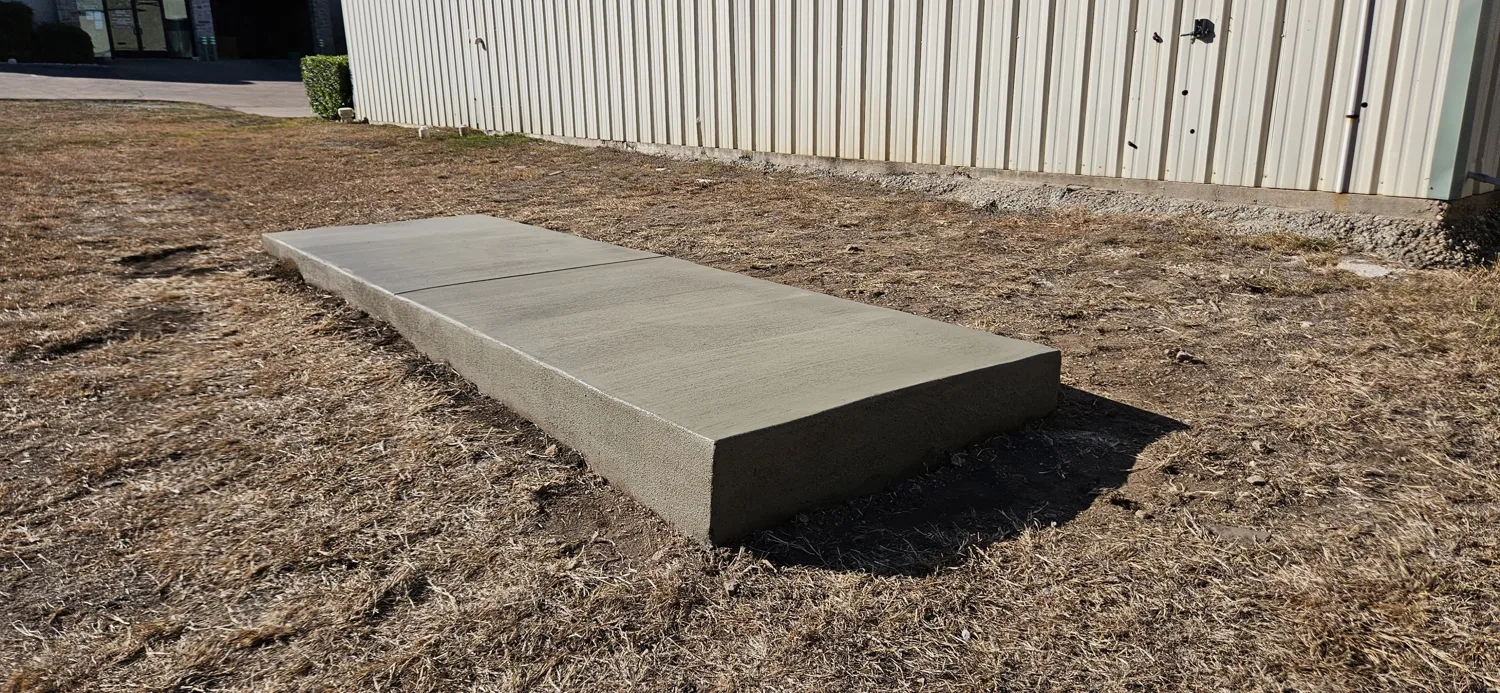
Pads and slabs get priced against the load and the ground beneath: a steel rebar grid matched to the use, a compacted base over red clay, and an air-entrained mix for the cold months. As a fair opening figure, most pads and slabs land in the $7 to $13 per square foot range, moving with thickness and whether a vapor barrier is called for. Both the sizing and the quote track the weight the pad is meant to carry.
The load decides it. A shed pad is a fraction of the weight of a garage or shop floor under vehicles and gear, so we tune thickness and steel to your real use and factor in the red clay underneath.
Yes. Those put down heavy, concentrated loads, so we build up the thickness and the rebar grid and pour an air-entrained mix. A hot tub on top of that needs a level, steady base that will not lift with a frost. Let us know the equipment and we will engineer the pad around it.
For an enclosed or heated slab, usually yes; it blocks ground moisture from climbing up through the concrete. We make the call based on what the slab is going to be used for.
Some do, hinging on size, location, and use, and the requirements differ from one Tulsa-area jurisdiction to the next. We point out when a permit looks likely so it gets handled at the start rather than turning up later.
Concrete goes on strengthening well after the surface looks finished, and a cold spell drags out those first days. We give you a firm load-it date built around your specific pour.
You'll hear back from a real person, usually the same day. No call center, no runaround, no chasing us down.
Booking up fast this season. Or call (918) 303-7111